BIOENGINEERING STUDIO
How Biointerphase invents
We operate as a bioengineering studio because meaningful technologies rarely emerge from one discipline or a rigid process. They begin with observation, grow through experimentation and become useful through collaboration with sponsors, customers and partners.
CORE COMPETENCIES
Organized by capability, labeled by maturity.
BIOMATERIALS
Functional surfaces and materials
Bio-derived coatings and surface treatments, formulation and screening, heat transfer and fouling, and textile-compatible application.
- THERMOPHASE heat-transfer surface treatmentCommercial
- OmniMaterials PFAS-free textile coatingsFunded development
- Plant-derived carbon-fiber precursorsExploration
- Bio-inspired adhesivesExploration
BIOSIGNALS INTELLIGENCE
Sensing, data and modeling
Multi-sensor systems, signal processing, physical baselines, predictive modeling and decision support, including acoustics.
- INTELLIPHASE performance analyticsDeployed
- Navy sonar and acoustic systemsFederal R&D
- SPARTN exoskeleton sensingFederal R&D
- Transit biocontamination and desalination biofouling modelsFederal R&D
- Responder-safety sensingExploration
Supported by prototype development, field demonstration, technical reporting, SBIR/STTR execution, intellectual-property strategy and technology transition.
OUR PROCESS
Observe. Invent. Validate. Transition.
01
Observe
Study the system, the interface and the unmet need.
02
Invent
Create materials, experiments, sensors, models and prototypes.
03
Validate
Generate evidence in the laboratory, with third parties and in real environments.
04
Transition
Protect the IP and work with customers, sponsors, licensees and market partners.
FEDERAL R&D
Technical depth, proven in federal programs.
Federal sponsors have funded much of our development, and we carry that work through demonstration and transition.
SBIR/STTR track record
Federal funding that becomes products
We treat every federal award as the start of a product. We compete for a small number of awards, each tied to a path to market, and carry the work through demonstration and transition. The Navy SBIR that started THERMOPHASE now underpins a commercial product, licensed for power generation to Pittsburgh Chemical Solutions.
View our SBIR.gov portfolio ↗ (opens in a new tab)- Phase I to Phase II conversion rate
- 28.57%
- Phase II commercialization: sales and investment per Phase II award>20× SBA benchmark (≥$100K)
- $2.23M
- Phase I awards
- 7
- Phase II awards
- 2
- Total SBIR/STTR funding awarded
- $2.64M
Source: SBIR.gov company portfolio (opens in a new tab), Interphase Materials, Inc. (DBA Biointerphase); first award 2016. Award figures as listed by SBIR.gov. Phase II commercialization figure reported by Biointerphase against the SBA benchmark of at least $100K in sales or investment per Phase II award.
Active federal R&D 2 programs
U.S. Army · STTR Phase II
ActiveOmniMaterials
PFAS-free protective textiles
Advancing the Phase I coating platform through formulation optimization, predictive modeling, third-party testing, manufacturing integration and transition planning for Army-relevant textiles. The Phase II program carries approximately $1.363 million over 24 months.
DoD ESTCP · ERDC-CERL
ActiveTHERMOPHASE
Navy Hospital
Demonstrating THERMOPHASE on an 850-ton mission-critical chiller at a Navy hospital, using operational data and borescope evidence to evaluate fouling, heat-transfer performance, economics and scalability across DoD facilities. Current analysis found the treated chiller maintained a 23.5% lower normalized condenser approach temperature than the cleaning-only comparison chiller over the overlapping evaluation period.
Completed federal R&D 11 programs
U.S. Navy · SBIR Phase I & II
THERMOPHASE
Submarine heat exchangers
Developed a thin surface treatment to reduce biofouling and improve heat-transfer performance in seawater piping, condensers and heat exchangers, with Ohio-class guided-missile submarines as the long-term transition target.
U.S. DOT · Maritime Administration
THERMOPHASE
USTS Kennedy marine chiller
Applied THERMOPHASE to a marine chiller aboard the USTS Kennedy using a practical circulation-based treatment process. Follow-up inspection showed visibly reduced fouling in treated condenser tubes compared with the untreated system.
U.S. Department of Energy · NETL
THERMOPHASE
Power-plant condenser efficiency
Evaluated THERMOPHASE on the condenser at Longview Power to improve heat-transfer performance and reduce condenser backpressure. Analysis two years after treatment reported a 0.26 ± 0.13 inHg backpressure reduction, helping establish the technology’s power-generation commercialization case.
U.S. Air Force · SBIR Phase I
THERMOPHASE
Cooling asset optimization
Evaluated cooling-system performance at Hill Air Force Base and investigated approaches for improving cooling-asset efficiency across the broader Air Force portfolio.
National Science Foundation · SBIR Phase I
INTELLIPHASE + THERMOPHASE
District cooling fouling detection
Phase I project to improve the efficiency of district cooling plants: a machine-learning system performance indicator that predicts the onset of fouling, signaling when to retreat the nano-engineered surface treatment and carry out other maintenance, plus added sensors for system diagnostics.
U.S. Army · Exosense
INTELLIPHASE
Soldier exoskeleton analytics
Developed a sensor-fusion and machine-learning platform for Army exoskeleton data to forecast user energy capacity and identify potential performance or injury-risk conditions. The Phase I effort also demonstrated forecasting two days of activity and explored integration with ATAK.
U.S. Navy · STTR Phase I
INTELLIPHASE
Sonar-dome condition monitoring
Developed an acoustic and sensor-fusion approach for assessing sonar-dome materials and predicting antifoulant service life, combining acoustic measurements, XRF data, environmental parameters and a biophysical diffusion model to estimate coating degradation and support proactive maintenance.
U.S. DOT · SBIR Phase I & II
INTELLIPHASE
Public-transit biocontamination
Developed an AI-enabled system for predicting biocontamination risk on public transportation using environmental sensing, biophysical modeling, sensor fusion and machine learning. The completed Phase II produced decision tools for drivers, dispatchers and operators, and facility engineers.
U.S. Department of the Interior · Bureau of Reclamation
HYDROPHASE + INTELLIPHASE
Desalination
Developed complementary biomaterial and predictive-monitoring technologies for reverse-osmosis desalination, targeting biofouling of membranes and other critical components. The project included coating development, real-time water-quality monitoring, AI-guided analysis, pilot-scale system work and technical validation.
U.S. DOT · Phase I
Zerotinous Materials
Biodegradable pyrotechnic components
Developed biodegradable material prototypes for pyrotechnic components as alternatives to conventional cardboard and plastic materials, combining biomaterial formulation, biodegradation and wettability testing, Design of Experiments, Response Surface Methodology and industry collaboration.
U.S. Army · STTR Phase I
OmniMaterials
PFAS-free protective textiles
Developed PFAS-free, bio-derived coatings that impart oil and water repellency to military-relevant textiles. Phase I screened 147 formulations using more than 30 biosynthetic reagents, incorporated data-driven optimization and independently evaluated leading candidates using AATCC textile test methods.
Sponsors include the U.S. Navy, U.S. Army, U.S. Air Force, Department of Energy, Department of Transportation, Department of the Interior (Bureau of Reclamation), National Science Foundation and DoD ESTCP.
CULTURE
Curious people who care about what they build.
Our bioengineers move across research, product development, proposals, intellectual property, customer work and technology transition, while holding high standards for evidence and technical craftsmanship.
Scientific rigor
Evidence, transparent assumptions and honest interpretation.
Curiosity
Better questions, and openness to unexpected observations.
Craftsmanship
Care in how experiments, products and relationships are built.
Impact
Success measured by real-world value.
WHAT WE’RE EXPLORING
Open to collaboration. Disciplined about evidence.
We protect valuable intellectual property, but we aren’t a secretive skunk works. We share selected ideas and experiments to find collaborators, technical experts, sponsors and market partners who can help good technologies move forward.
Studio initiative · Early validation


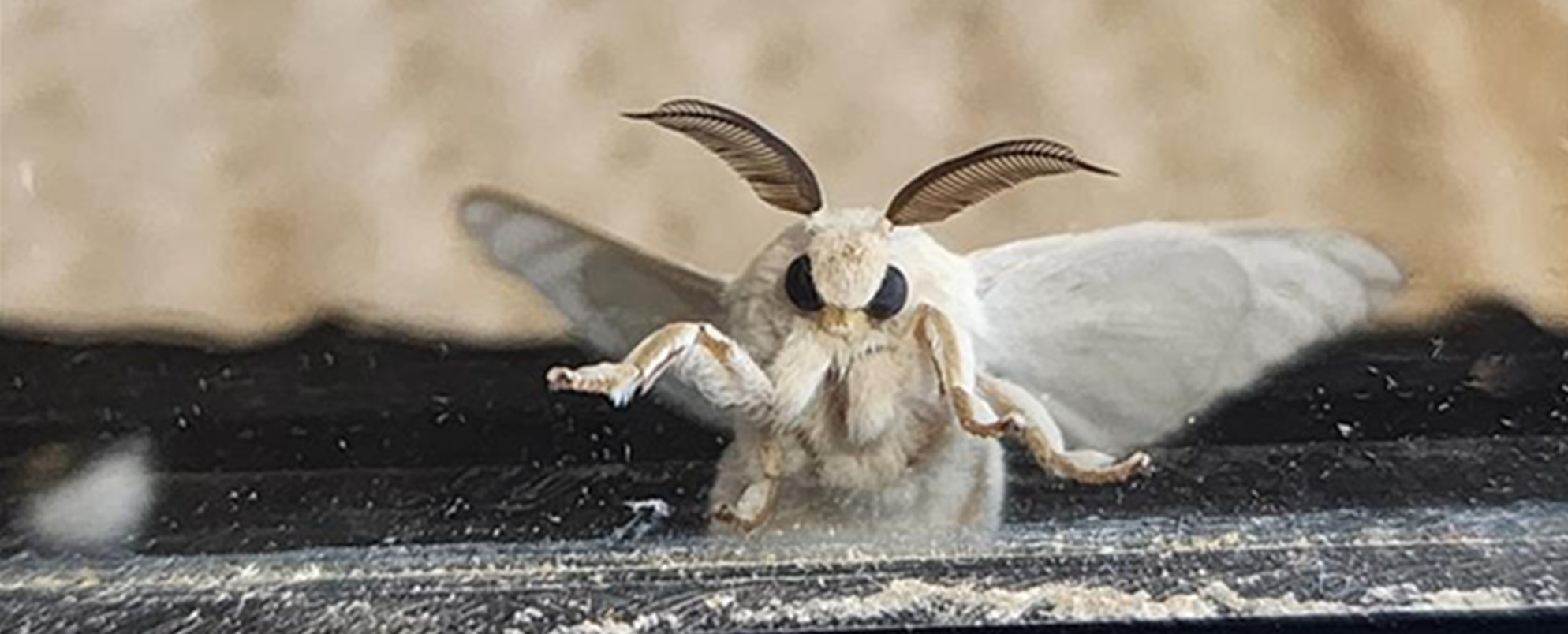
Steel City Silk
A Biointerphase initiative exploring domestic sericulture, modular biomanufacturing, automation and engineered silk materials, connecting Western Pennsylvania’s silk history with modern bioengineering and domestic manufacturing.
Seeking research partners, technical collaborators and sponsors.
Concept under development
Plant-derived carbon-fiber precursors
Cellulose and lignin processing with silk-templated architectures for domestic high-temperature materials.
Studio exploration
Bio-inspired adhesives
Tissue-facing materials inspired by biological wet adhesion.
Seeking research partners
Responder-safety sensing
Sensing and decision support for emergency responders.
Exploration concepts represent active areas of investigation. Inclusion does not indicate commercial availability, validated performance or a funded program unless specifically stated.