
USTS Kennedy
A biofouling-prevention demonstration on a seawater cooling system: the first application of THERMOPHASE to a marine chiller, aboard the training ship USTS Kennedy, sponsored by the DOT Maritime Administration.
← All marine demonstrationsHow THERMOPHASE is used in marine and seawater systems →
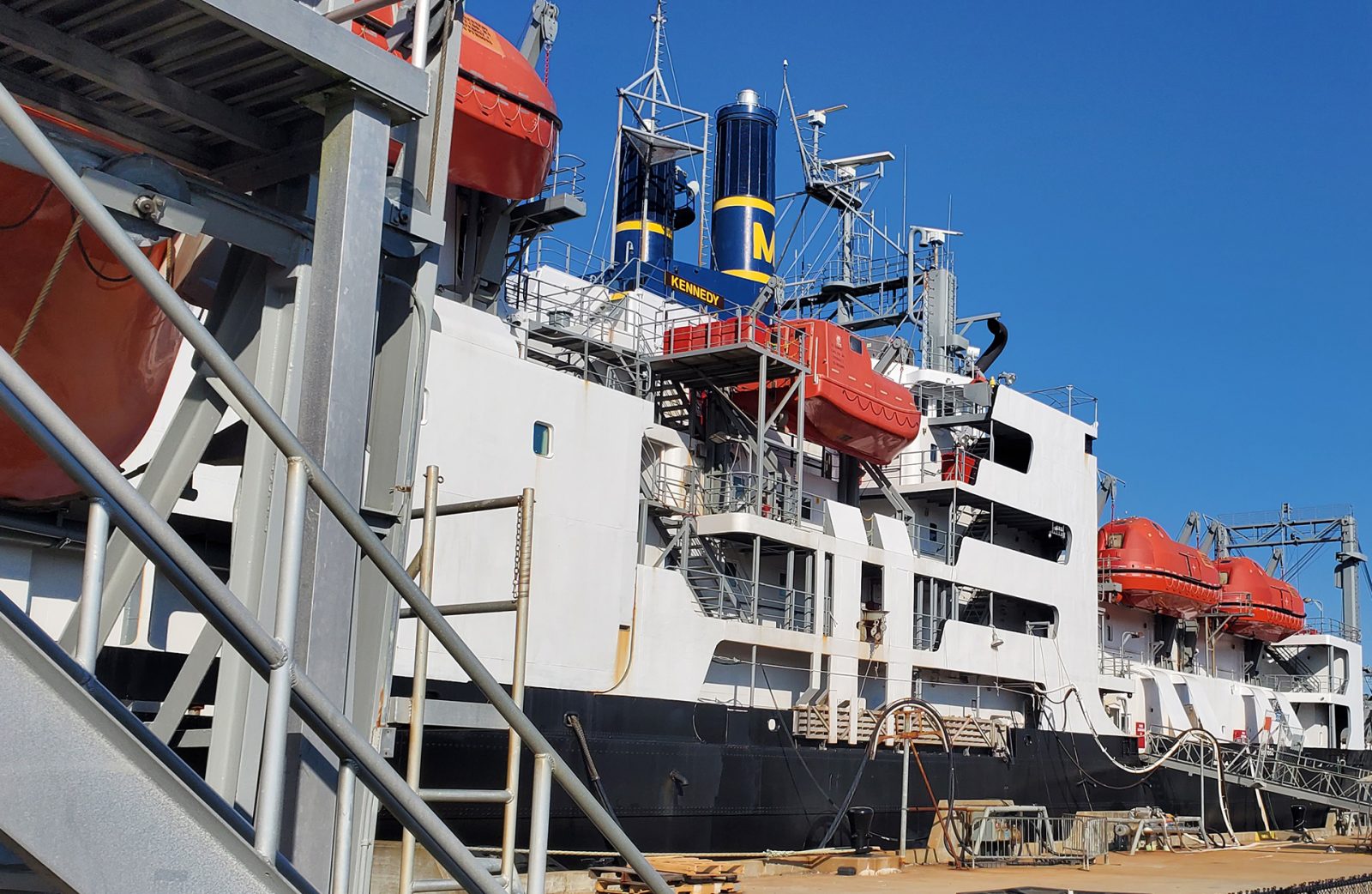
Completed field demonstration
Project summary
- Customer
- USTS Kennedy, the Massachusetts Maritime Academy training ship
- Sponsor
- U.S. Department of Transportation, Maritime Administration (MARAD), Maritime Environmental and Technical Assistance (META) program
- Partners
- Massachusetts Maritime Academy (opens in a new tab) and Life Cycle Engineering (opens in a new tab)
- Application
- Shipboard chiller and auxiliary seawater cooling system
- Dates
- 2021–2022
- Significance
- First application of THERMOPHASE to a marine chiller
- Status
- Completed; final report published by MARAD
Result
After 115 days in operation, a significant reduction in biofouling was observed on the test coupons and inside the condenser of the demonstration chiller. Follow-up inspection showed visibly reduced fouling in treated condenser tubes compared with the untreated system.
Economic significance
Not quantified. Reliable data could not be collected from the seawater-cooled chillers, so baseline efficiency metrics, and therefore energy or cost savings, could not be calculated.
The problem
Biofouling in seawater-cooled systems reduces the effectiveness of critical shipboard systems, such as HVAC plants and engines, lowering energy efficiency and increasing emissions and maintenance costs.
What was done
THERMOPHASE was applied to a demonstration chiller using a practical circulation-based treatment process, and THERMOPHASE test coupons were installed in an auxiliary seawater cooling system strainer.
Limitations Results reflect one vessel over 115 days of operation, based on observation and inspection rather than measured energy use. Unreliable data from the seawater-cooled chillers prevented calculation of baseline efficiency metrics.
Documentation
MORE DEMONSTRATIONS
More marine demonstrations
No demonstrations have been published for this market yet.