

A BIOINTERPHASE TECHNOLOGY
More heat transfer. Less fouling. Better performance from existing equipment.
THERMOPHASE is an advanced surface treatment designed to improve heat transfer and resist fouling in industrial cooling and heat-exchange systems.
A BIOINTERPHASE TECHNOLOGY
THERMOPHASE®
A biocide-free surface treatment designed to improve heat transfer and resist fouling in industrial cooling and heat-exchange systems. By modifying the fluid–surface interface, it reduces boundary-layer resistance and can enhance heat transfer even on clean equipment; over time, it helps limit the biological and other fouling that adds thermal resistance.

BIOSIGNALS INTELLIGENCE · A BIOINTERPHASE INVENTION
INTELLIPHASE
Complex systems rarely announce change with one clean signal. INTELLIPHASE combines sensing, operational data, physical context and modeling to establish baselines, predict change and support decisions.
Deployed capabilities · Continuing development


BIOMATERIALS · A BIOINTERPHASE INVENTION
OmniMaterials
OmniMaterials is a PFAS-free, bio-derived omniphobic coating platform under development for military and technical textiles. It is not yet commercially available.
Funded Army Phase II development
RESULTS BY MARKET
Performance with measurable economic potential.
Measured result
0.26 inHg
Lower condenser back pressure (± 0.13 inHg) over two years of monitoring
Estimate
$3.35M
Estimated fuel savings over the two years after treatment
Estimate
136 million
Pounds less CO₂ emitted over two years
Longview Power, DOE/NETL-supported field demonstration on an operating power-plant condenser. Estimates from the DOE final technical report, which also reports 1.287 billion gallons less water withdrawn. An independent EPRI evaluation of treated condenser tubes is complete, with public results to be published. Plant results depend on cooling-water source, fouling regime and operating profile.
View the Longview Power demonstration →
All power demonstrations →
Industrial cooling covers
- Building chillers
- District energy plants
- Chiller and heat-exchanger systems
- Data-center cooling
Reported result
23.5%
Lower normalized condenser approach temperature
Projection
$20,220
Projected annual value per 850-ton chiller
Projection
2–3 months
Projected simple payback
Navy hospital, DoD ESTCP demonstration, per 850-ton chiller. Economic projections depend on operating assumptions and site conditions and are not guaranteed.
View the Navy hospital demonstration →
All industrial cooling demonstrations →
Completed field demonstration
USTS Kennedy
Marine chiller: visibly reduced fouling in treated condenser tubes compared with the untreated system
Marine is where THERMOPHASE began; current commercial availability is being defined.
APPLICATIONS
Where THERMOPHASE Creates Value
Power Generation
Explore the potential to improve condenser performance and manage fouling in power-generation cooling systems.
Potential benefit: better condenser heat transfer and fewer forced cleanings.
Learn More →Industrial Cooling
Assess existing chiller and heat-exchanger systems, from building and district chillers to data-center cooling, for possible improvements in thermal performance and fouling resistance.
Potential benefit: more performance from equipment you already own.
Learn More →Marine
Explore fouling resistance and preserved thermal performance in seawater piping, heat exchangers, aftercoolers and shipboard chillers.
Potential benefit: fouling resistance in demanding seawater service.
Learn More →Benefits shown are potential outcomes; evidence differs by application and is summarized on each application page.
HOW IT WORKS
Two Complementary Performance Benefits
THERMOPHASE is a biocide-free, waterborne nanomaterial that attaches to heat-transfer surfaces and forms a molecule-thin barrier between the metal and the water. It has been used on the cooling systems of working hospitals, including at a Navy hospital and a Pittsburgh hospital. How THERMOPHASE stays safe →
Enhanced Heat Transfer
The treated surface lowers boundary-layer thermal resistance, so heat moves across the tube wall more easily. That can improve heat transfer right away, including on equipment that is already reasonably clean.
Resistance to Fouling
The barrier limits the organic and biological deposits that add fouling resistance, so performance degrades more slowly and surfaces are easier to clean.
UNTREATED
Biofilm & mineral deposits
WITH
Surface stays clean
Deposits insulate the untreated tube, so less heat reaches the cooling water. THERMOPHASE binds to the tube surface as a molecule-thin layer that keeps deposits from attaching, so heat keeps flowing. See it in motion →
IMPLEMENTATION
How THERMOPHASE Is Implemented
An asset-level treatment that fits into existing operations. Four topics we cover with every prospective customer:
System suitability
For chiller condensers and evaporators, plate heat exchangers and similar equipment with stainless steel, copper, copper-nickel, aluminum or titanium surfaces. Systems should be reasonably clean; most customers use a low approach temperature to judge readiness.
Application process
You and Biointerphase select the assets to treat. Each one is isolated and taken offline, and THERMOPHASE circulates through it for about one hour to cover the heat-transfer surfaces.
Return to operation
The asset returns to service with no operational changes. THERMOPHASE attaches to the surface rather than staying in the water, and works alongside existing water-treatment programs.
Performance monitoring
Results are tracked against a baseline or untreated control: approach temperature and kW draw by load, plus tube inspection such as borescope and eddy-current testing. Annual reapplication is recommended.
FIELD VALIDATION
Validated in Demanding Environments
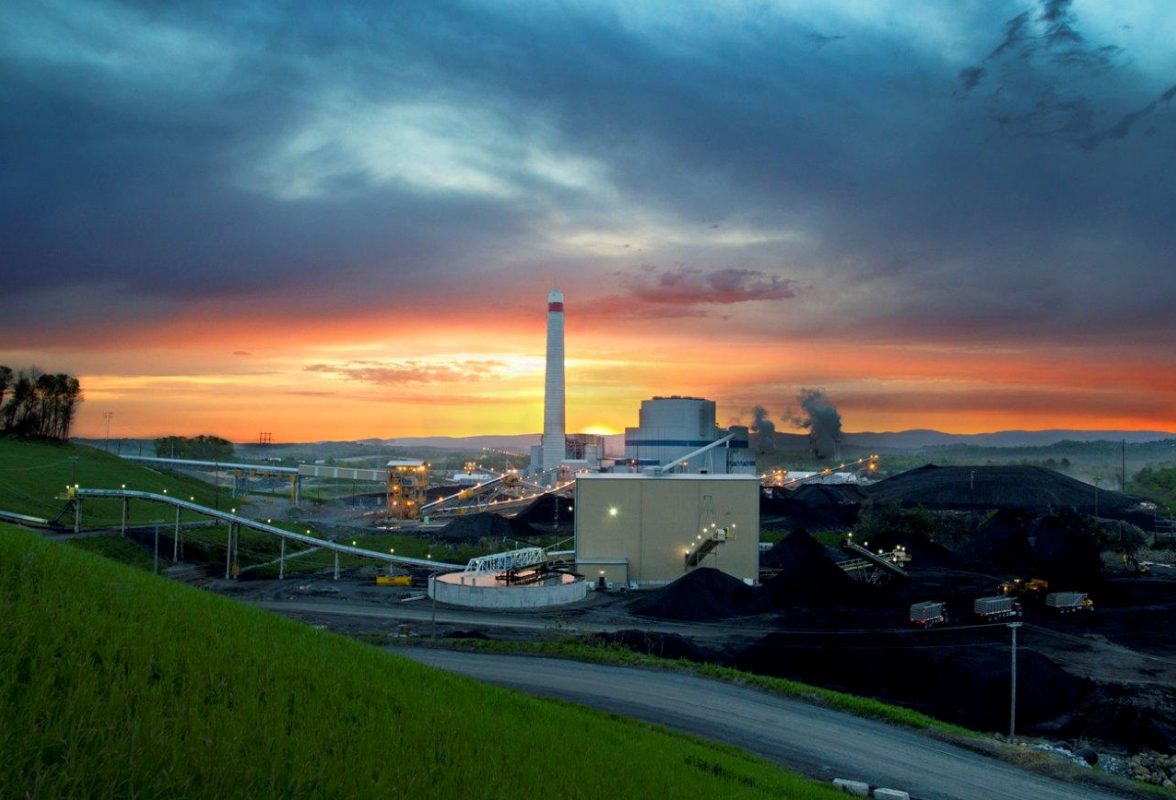
Longview Power
- Organization
- DOE Office of Fossil Energy · NETL
- Application
- Operating power-plant condenser
- Documented outcome
- 0.26 ± 0.13 inHg lower condenser back pressure; estimated $3.35M in fuel savings over two years

EPRI independent testing
- Organization
- Electric Power Research Institute
- Application
- Condenser-tube heat transfer
- Documented outcome
- Independent evaluation of heat-transfer performance
Navy Hospital
- Organization
- DoD ESTCP · Navy hospital
- Application
- 850-ton facility chillers
- Documented outcome
- 23.5% lower normalized condenser approach temperature, treated versus untreated chiller
District energy plant, New Orleans
- Organization
- New Orleans, Louisiana
- Application
- Four ~2,000-ton centrifugal chillers versus four matched untreated controls
- Documented outcome
- 5.6–14.3% lower kW draw by load range; approach temperature maintained at 0.2–1.2 °F
Hospital facility
- Organization
- Pittsburgh, Pennsylvania
- Application
- Building chillers, treated annually since 2021
- Documented outcome
- Zero new failed or degraded condenser tubes 2021–2024 by eddy-current testing; annual tube cleaning avoided
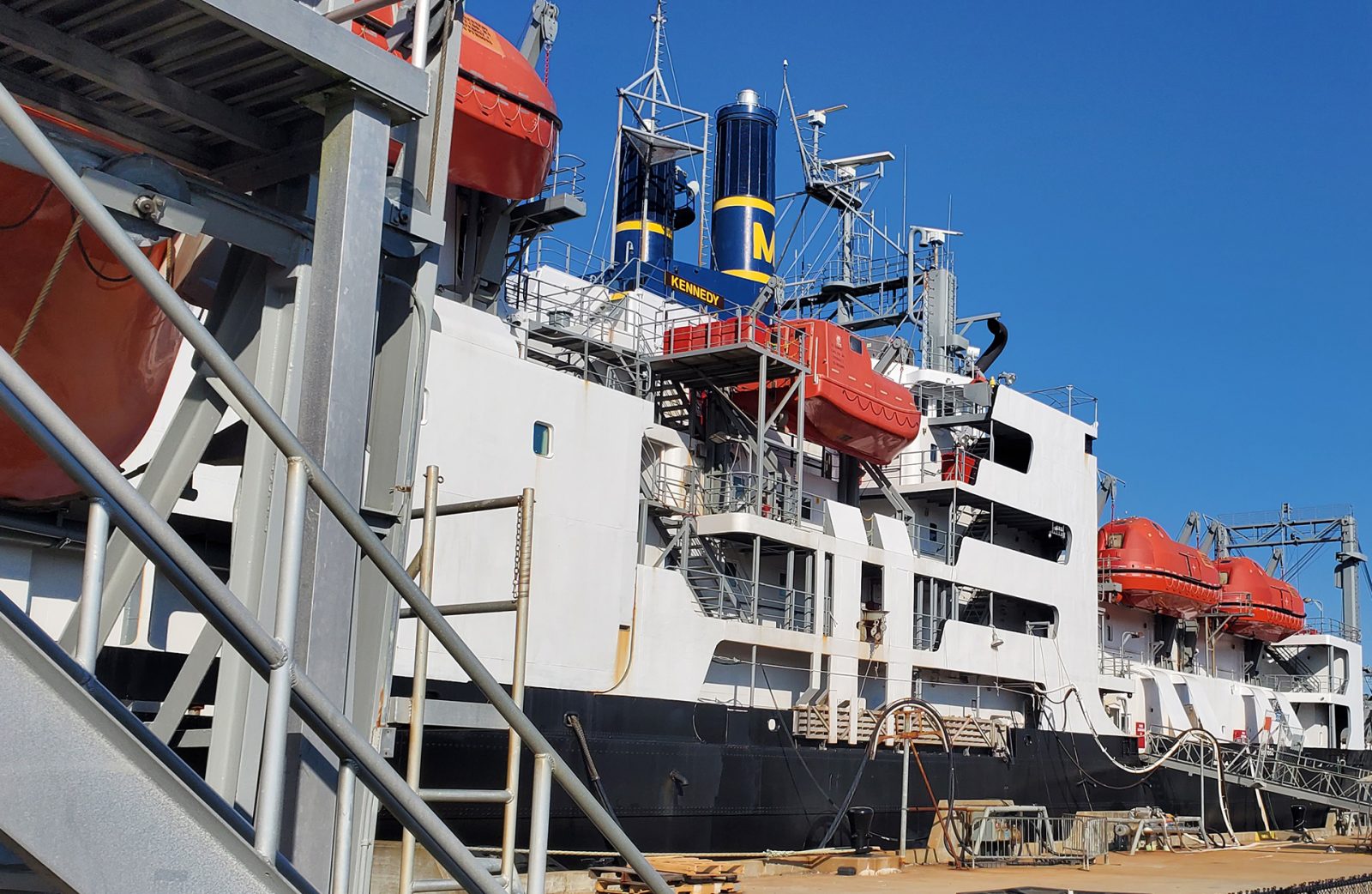
USTS Kennedy
- Organization
- DOT Maritime Administration (MARAD), with Massachusetts Maritime Academy and Life Cycle Engineering
- Application
- Marine chiller and seawater cooling system
- Documented outcome
- Significant biofouling reduction after 115 days, 2021–2022
Could THERMOPHASE Improve Your System?
Tell us about your cooling or heat-transfer application, and we can discuss whether THERMOPHASE warrants a technical evaluation.
Something else? Contact us.
ABOUT BIOINTERPHASE
The Science Behind Biointerphase
Biointerphase began as a University of Pittsburgh intellectual-property spinout. Led by bioengineer Dr. Noah Snyder, its team works across Biomaterials and Biosignals Intelligence and has carried technologies from federally funded research for the Navy, Army, DOE, DOT, DOI and NSF through field demonstration and licensing. THERMOPHASE is the first to reach commercial scale.